

Staring at a blank spreadsheet labeled “Media Plan” usually means the same three questions hit at once. How much should go into each channel, what should the campaign measure, and how do you know whether the plan is realistic before you spend a dollar?
Most media plan examples don’t help. They give you a tidy template with boxes for audience, budget, and KPIs, but they don’t show how a local service business should split effort between Google Local Services Ads and Local SEO, or how an e-commerce brand should sequence prospecting, retargeting, and landing page testing. That’s where people start guessing.
Guessing gets expensive fast. A weak media plan usually doesn’t fail because the business chose the “wrong” platform. It fails because the channel mix doesn’t match the buying journey, the tracking setup is sloppy, and the team scales spend before they’ve proven conversion quality.
The strongest media plan examples work backward from revenue. They define the business model first, then choose channels that fit how customers buy. A local roofer needs a different blueprint than a DTC skincare brand. A boutique agency trying to expand services through a white-label partner needs a different cadence than a B2B company running LinkedIn lead gen.
Below are eight practical blueprints built around common small business situations. Each one includes a sample budget structure, a workable channel mix, the KPIs that matter, and the trade-offs people usually discover only after burning through budget. Some plans are built for speed. Others are built for compounding gains. A few are intentionally boring, because boring systems often outperform flashy campaigns.
If you’ve been hunting for media plan examples that go beyond generic templates, start here.
1. Google Ads Performance Max Campaign
Performance Max is useful when a small business wants broad Google inventory without managing separate campaigns across Search, Display, YouTube, Gmail, and Maps every day. It works best when the account already knows what a good lead or sale looks like and can feed that signal back into Google consistently.
A simple starter plan for a local multi-service business might put most paid acquisition budget into Performance Max, then reserve a smaller portion for branded search defense and landing page fixes. For a small e-commerce catalog, I’d usually separate campaigns by category or margin band instead of throwing every product into one bucket. That keeps reporting cleaner and prevents top sellers from hiding weak performers.

A workable budget split
You don’t need a complex spreadsheet to start. You need a budget structure that leaves room for learning.
- Core spend: Put the majority into one primary Performance Max campaign tied to your main conversion goal.
- Protection spend: Hold a smaller share for branded search or competitor search if brand demand already exists.
- Optimization reserve: Keep part of the budget uncommitted for creative refreshes, landing page edits, and seasonal tests.
The trade-off is control. Performance Max can find conversions in places you wouldn’t have bought manually, but it also hides some placement-level detail. That’s fine if your tracking is clean. It’s a problem if you’re optimizing off junk leads, duplicate form fills, or low-quality calls.
What to watch early
Creative volume matters. Give the campaign enough image and video assets to test different hooks, offers, and use cases. Thin asset groups usually create bland ads and weak learning signals.
For funnel alignment, Google Ads campaigns across the marketing funnel is a useful framework. The biggest mistake with Performance Max is treating it like a magic switch instead of a system that still depends on offer, landing page, and conversion setup.
Practical rule: Don’t judge this campaign on lead volume alone. Judge it on lead quality, sales acceptance, and whether conversion tracking matches real business outcomes.
Good KPIs here are qualified leads, booked calls, purchases, cost per qualified action, and revenue by campaign group. Impressions and clicks matter only if they help explain those outcomes.
2. Integrated Local SEO + Google Local Services Ads Hybrid
For plumbers, electricians, HVAC companies, roofers, and movers, this is one of the most reliable media plan examples because it captures two kinds of demand at once. Local SEO builds durable visibility in the map pack and organic results. Local Services Ads capture urgent, high-intent searches that need a phone call now.
A practical monthly plan usually splits effort between paid lead flow and organic asset building. Paid gets the phones ringing sooner. Organic lowers dependency on paid over time. If you choose only one, you usually create a bottleneck. Paid-only campaigns can become fragile. Organic-only campaigns can take too long to support growth.
How the channel mix should work
Your Google Business Profile is the operating center. Reviews, service categories, photos, service descriptions, and local landing pages all feed organic visibility and improve trust when a shopper sees your brand more than once on the results page.
Local Services Ads then sit on top of that foundation. They work especially well when the team answers quickly, handles leads consistently, and protects review quality. If intake is sloppy, the campaign can still produce leads, but it won’t produce enough good ones.
A sample media allocation for a local service business often looks like this:
- Immediate demand capture: Use Local Services Ads for urgent, bottom-funnel searches.
- Organic market coverage: Build location pages for each service area and each priority service line.
- Trust infrastructure: Invest time in review generation, citation consistency, and local backlinks from chambers, trade groups, and neighborhood organizations.
Where most plans break
Businesses often overfund lead generation and underfund local landing pages. Then they wonder why branded search rises but non-branded visibility stalls.
Modern media planning now leans heavily on first-party data activation, stronger attribution, and measurement frameworks that move beyond surface metrics, as outlined in Setup’s guide to building modern media plans. For local service companies, that means tracking booked jobs, not just incoming leads.
When both listings appear together, you don’t just gain more clicks. You gain more trust.
The KPIs that matter here are booked estimates, qualified calls, cost per booked lead, review velocity, map pack visibility, and close rate by service line. The wrong KPI is raw lead count if the office can’t convert those leads into jobs.
3. Programmatic Retargeting Campaign with Dynamic Creative Optimization
Retargeting is where many small businesses recover revenue they already paid to attract. Someone visited a product page, started a quote, browsed a service page, or abandoned a cart. They showed intent. A retargeting plan gives you another shot without starting from zero.
This blueprint works especially well for e-commerce brands with enough product variation to personalize ad creative. It also works for SaaS free trials and service businesses with long consideration windows, where buyers visit multiple times before converting.

Segment first, then build ads
Don’t lump all visitors into one pool. A homepage visitor and a cart abandoner are not the same audience.
A cleaner retargeting plan usually creates separate audience groups such as recent product viewers, cart abandoners, return visitors, and past customers. Then the creative changes by intent. Cart abandoners might see urgency or shipping reassurance. Product viewers might see benefits, reviews, or a product comparison. Past customers might see refill or cross-sell offers.
A small but effective budget structure often looks like this:
- Highest intent: Reserve the biggest share for cart or checkout abandonment audiences.
- Mid intent: Use a smaller share for category or service-page visitors.
- Expansion layer: Test lookalike or modeled audiences only after direct retargeting is working.
The creative trade-off
Dynamic creative optimization sounds efficient because it is. It can also turn lazy messaging into automated underperformance if you feed the system weak assets.
That’s why it helps to pair dynamic ad assembly with stronger creative production. Tools like ShortGenius AI ad creative tool can speed up variation testing, but the underlying offer still has to match buyer hesitation. If customers are hesitating over shipping, your ad should address shipping. If they’re hesitating over trust, the ad should lead with proof.
Watch frequency closely. Retargeting can become annoying fast, especially for low-ticket products or short buying windows. Exclude recent purchasers quickly and refresh creative before fatigue sets in.
Good KPIs include return conversion rate, assisted conversions, view-through influence, cost per returning purchaser, and revenue from warm audiences. Click-through rate matters less than whether the audience comes back and buys.
4. Strategic Social Media Campaign with Lead Generation Forms
Social lead generation works when the offer is simple, the audience is well defined, and the follow-up process is fast. It doesn’t work when the form asks for too much, the creative looks recycled, or the sales team treats inbound social leads like a low priority pile.
This plan is a strong fit for B2B agencies, financial advisors, education providers, franchise groups, and local service brands selling consultations. Native lead forms on Facebook, Instagram, and LinkedIn reduce friction because the user doesn’t have to leave the platform.
A realistic campaign shape
For most small businesses, social shouldn’t carry the whole acquisition plan by itself. It works better as a pipeline builder paired with email follow-up, remarketing, and a clear sales process.
A practical social budget often splits into three jobs:
- Awareness content: Short video, testimonial clips, educational posts, and founder-led insights.
- Lead capture: Native lead form campaigns built around one offer, such as an estimate, audit, or consultation.
- Nurture and retargeting: Follow-up ads and email sequences for people who opened or submitted forms.
Platform choice matters. LinkedIn tends to work better for higher-value B2B offers and narrower targeting. Facebook and Instagram usually work better for broader local audiences, life-stage targeting, and visual service offers.
The follow-up window matters more than the form
A lot of businesses blame platform quality when the actual issue is speed to lead. Social leads cool down fast. If nobody calls, texts, or emails promptly, the campaign starts looking weak even when the targeting is solid.
In Dot IT’s consulting-business case study, a data-driven media plan increased ROI by 25% within two months by combining targeted channel selection with close KPI tracking across ad platforms and analytics. That’s a useful reminder that channel selection and monitoring discipline matter just as much as creative.
Social lead gen is less about collecting contacts and more about compressing the time between interest and conversation.
Measure form completion rate, lead quality, appointment rate, and close rate by platform. Followers and engagement can support credibility, but they shouldn’t be the headline KPI unless brand awareness is the explicit objective.
5. SEO + Content Marketing Integrated Campaign
This is the blueprint for businesses that want compounding visibility instead of renting every click. It’s slower than paid media, but it creates assets that keep working after the month ends. For service businesses, SaaS brands, e-commerce stores, and agencies, strong SEO plus content is one of the most defensible media investments you can make.
The mistake is treating content as a publishing exercise. Publishing isn’t the same as planning. A good media plan here maps content to revenue paths, not just keyword lists.
Build around commercial intent
Start with pages that can make money. Service pages, category pages, comparison pages, and location pages usually deserve attention before broad thought-leadership content.
Then build supporting content around those pages. Educational articles help capture earlier-stage searches, answer objections, and earn internal links. But they should support your conversion pages, not compete with them.
A practical monthly allocation often includes:
- Technical cleanup: Indexing, internal links, page speed issues, duplicate content, and schema basics.
- Money pages: Service, collection, and landing page optimization tied to commercial terms.
- Support content: Articles, guides, and FAQs that move visitors deeper into the site.
- Authority work: Link acquisition, digital PR, and partnerships that improve trust signals.
For teams that need planning discipline, creating a content calendar for SEO helps keep publishing tied to real priorities instead of random topic ideas.
Why this plan scales well
A strong planning principle comes from a media planning case study by Five Nine Strategy. In that case, planners used public Census data, ZIP-code segmentation, and a weighted Media Efficiency Score in a $4 million, 3-month Seattle DMA campaign to scale investment across channels while preserving targeting precision. The lesson for small businesses is simple. Organized segmentation beats broad assumptions.
That same discipline applies to SEO. Segment by service line, location, and search intent. Don’t just target “best keywords.” Build clusters around how buyers search when they’re comparing options, looking for local providers, or trying to solve a specific problem.
Good KPIs are rankings for commercial terms, qualified organic leads, non-branded conversions, assisted conversions, and revenue from organic landing pages. Traffic alone isn’t enough.
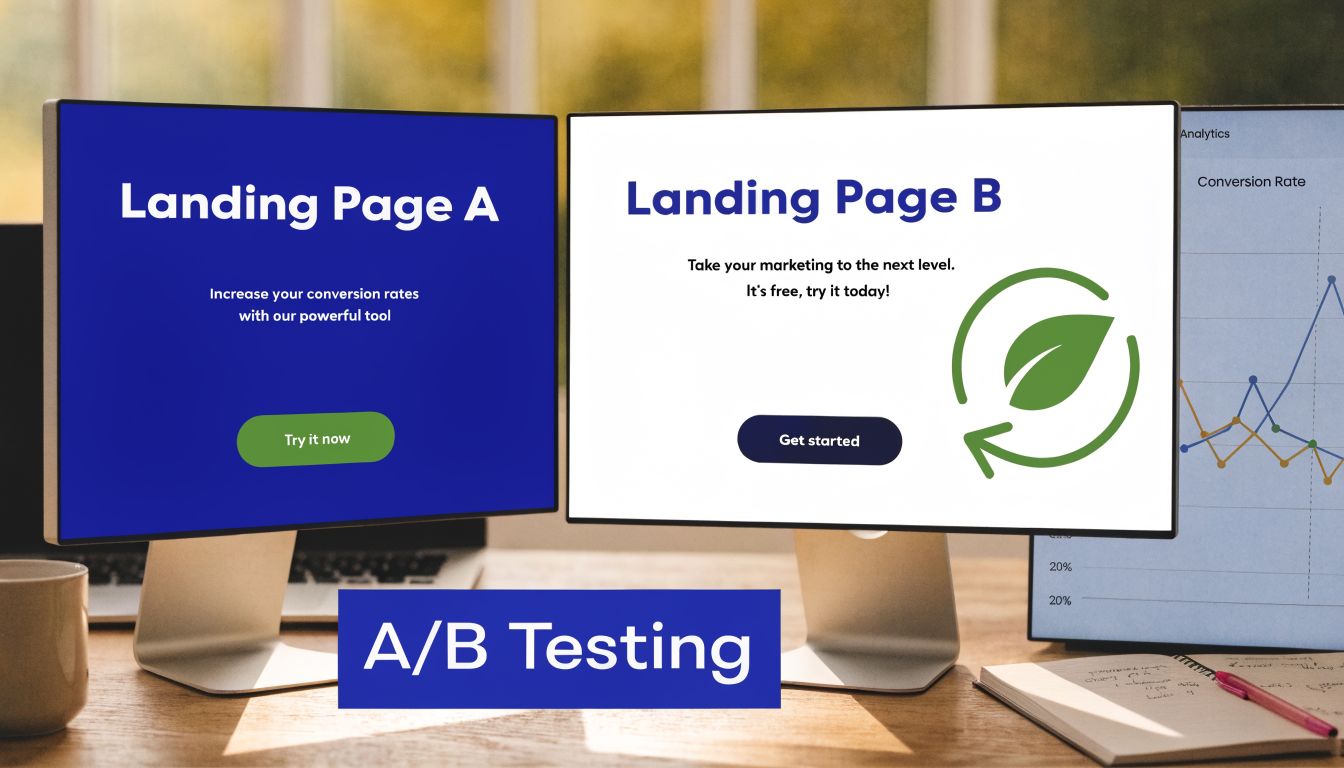
6. Conversion Rate Optimization CRO Testing Campaign
Some of the best media plan examples don’t add channels at all. They improve the performance of traffic you already have. That’s what CRO does. It turns paid media, SEO, email, and social into more revenue without increasing acquisition volume first.
If you’re buying traffic and not testing the pages receiving that traffic, you’re usually overspending on media to compensate for page friction.
Start with high-friction pages
The best first tests are usually obvious in hindsight. Quote forms with too many fields. Product pages with weak delivery info. Landing pages with vague headlines. Checkout flows that hide costs too late.
A useful CRO media plan assigns a portion of the monthly budget to experimentation instead of forcing every dollar into traffic buying. For small teams, that might mean one meaningful test at a time on the highest-value pages. For larger accounts, it can mean a steady testing pipeline across service pages, product pages, and checkout steps.
A strong testing sequence usually looks like this:
- Diagnosis first: Review session recordings, form analytics, and page behavior before changing anything.
- Hypothesis next: Test a clear idea tied to a specific friction point.
- Rollout last: Push winners carefully, then retest instead of assuming the page is “done.”
Don’t confuse test volume with progress
A lot of teams run too many small tests that never touch a real bottleneck. Button color changes get attention because they’re easy. Offer clarity, trust signals, pricing communication, and form design usually matter more.
For e-commerce teams, A/B testing ideas for e-commerce gives a practical place to focus first. And if your landing pages need stronger message-to-conversion alignment, improving conversion rates on landing pages is a useful companion read.
This is worth watching if your team needs a visual walkthrough of testing basics.
Field note: Test pages people already visit. A brilliant experiment on a low-traffic page usually has less business impact than a solid fix on a high-intent page.
The KPIs here are conversion rate by page type, form completion rate, cart completion, lead quality, revenue per session, and cost per acquisition after page changes go live.
7. White-Label Agency Partnership Campaign
This plan isn’t for the end advertiser. It’s for the agency that wants to grow without hiring a full bench for every channel. White-label partnerships let a boutique shop sell SEO, PPC, design, or web support under its own brand while another team handles fulfillment behind the scenes.
It’s one of the cleaner growth models for agencies that already have trust with clients but don’t want to build every specialty in-house. The trade-off is operational. You gain capability, but only if process, reporting, and quality control are tight.
Where this model works
A branding agency might add SEO and Google Ads through a fulfillment partner. A paid media consultant might bolt on landing page design and development. A local marketing shop might offer enterprise-style deliverables to larger accounts without hiring a large technical team.
The monthly media plan here is partly a service-delivery plan. Budget usually covers partner fulfillment, account management time, client-facing reporting, and internal QA. Margin discipline matters. So does role clarity.
A sound structure often includes:
- Offer packaging: Define what’s included, what isn’t, and when work is considered complete.
- Client communication: Keep one visible point of contact on your side, even if execution is distributed.
- Review checkpoints: Audit deliverables before they reach the client so quality stays consistent.
What separates healthy partnerships from messy ones
The best white-label setups have strict handoff rules. Who owns strategy. Who owns implementation. Who joins calls. Who responds when a client asks a technical question.
This model fails when the agency sells custom work that the partner is set up to deliver only in standardized workflows. It also fails when reports are so generic that the client can’t connect activity to outcomes.
Good KPIs for this media plan include client retention, revenue per account, turnaround time, on-time deliverables, gross margin by service line, and upsell rate. Those metrics won’t look flashy in a pitch deck, but they tell you whether the partnership strengthens the agency.
8. Omnichannel Customer Acquisition Campaign
When a business is ready to coordinate search, social, email, content, and retargeting into one journey, this is the blueprint. It’s one of the most mature media plan examples because it forces every channel to play a role instead of competing for credit.
This model works for B2B services, multi-product e-commerce brands, local companies with repeat buying cycles, and businesses with longer decision windows. It’s not the best place to start if you haven’t already sorted out tracking, offer clarity, and sales follow-up.
Match channels to buying stage
Not every channel should be asked to close the sale. Some channels introduce the problem. Others validate the solution. Others bring people back after they leave.
A clean omnichannel structure usually maps like this:
- Awareness: Content, social, YouTube, or upper-funnel display.
- Consideration: Search, retargeting, email nurture, and product or service comparison pages.
- Decision: Sales outreach, remarketing, branded search, direct mail in some local markets, and strong landing pages.
Measurement discipline matters. Modern media planning keeps moving away from last-click reporting because it hides the role of early touchpoints. If an awareness campaign starts demand that later converts through branded search, the search campaign shouldn’t get all the credit by default.
Why coordinated plans outperform disconnected ones
A business running search ads alone often sees good bottom-funnel results but struggles to scale. A business running social alone may get attention but weak close rates. Omnichannel plans work because each channel supports a different stage.
One useful caution comes from a Bionic media planning article. It argues that many existing media plan examples still miss budget-constrained planning for smaller businesses and often underplay AI-driven optimization in modern channel mixes. The article includes several forward-looking figures tied to internal trend analysis and projections. I’d treat those directional claims carefully, but the strategic point stands. Small businesses need practical plans that reflect constrained budgets and smarter automation, not just enterprise-style templates.
Good omnichannel planning doesn’t mean being everywhere. It means showing up in the right sequence.
The right KPIs are pipeline contribution by channel, assisted conversions, customer acquisition cost, lead-to-sale rate, and revenue by journey stage. If marketing and sales don’t agree on definitions, this plan will look more advanced than it really is.
8-Point Media Plan Comparison
| Campaign | ???? Implementation Complexity | ⚡ Resource Requirements | ⭐ Expected Outcomes | ???? Ideal Use Cases | ???? Key Advantages |
|---|---|---|---|---|---|
| Google Ads Performance Max Campaign | Medium-high, initial asset setup and tracking; automated thereafter | Requires quality historical conversion data, 10–15 images, 3–5 videos, GA integration | Predictable cross-channel ROI; scalable conversions after 2–4 weeks | E‑commerce DTC, small businesses seeking hands‑off PPC, multi-product scaling | Automated cross‑channel optimization; reduces manual bidding; easy to scale |
| Integrated Local SEO + Google Local Services Ads Hybrid | Medium, ongoing citation, review management, LSA verification | Time for GBP optimization, citation building, review generation, landing pages | Fast paid leads via LSA + long-term organic visibility (SEO 3–6 months) | Plumbers, HVAC, contractors, local service providers | Dual organic+paid visibility; pay‑per‑lead LSA; builds trust via reviews |
| Programmatic Retargeting with Dynamic Creative Optimization | High, feed/DCO setup and RTB integration; advanced segmentation | Needs minimum audience size (500–1000+), dynamic feeds, DSP access, creative variants | Higher conversion rates from warm audiences; CPA often 40–60% lower | E‑commerce, DTC, SaaS retargeting warm users | Personalized creatives at scale; real‑time optimization; efficient ROAS |
| Strategic Social Media Campaign with Lead Generation Forms | Medium, ongoing content cadence and audience management | Content production (video), ad spend, native lead form setup, community management | Lower CPL vs search; builds audience and pipeline; variable lead quality | B2B lead gen, local businesses, brands building community | Low‑friction on‑platform lead capture; strong audience building; high engagement with video |
| SEO + Content Marketing Integrated Campaign | High, technical SEO, content production, link building, ongoing optimization | Sustained content & SEO expertise, outreach resources, analytics (GA4/Search Console) | Compounding organic traffic and authority; higher quality leads over 3–12+ months | Businesses with 12+ month horizon, SaaS, e‑commerce, thought leadership goals | Sustainable traffic with decreasing CAC over time; defensible market positioning |
| Conversion Rate Optimization (CRO) Testing Campaign | Medium-high, disciplined testing process, analytics, technical implementation | Requires sufficient traffic/conversions (500+ conv/month), A/B tools, dev support | Improves revenue from existing traffic; quick wins in 2–4 weeks; cumulative gains | Companies with 1k+ monthly visitors, e‑commerce, SaaS self‑serve funnels | Raises ROI without extra traffic; data‑driven continuous improvement |
| White-Label Agency Partnership Campaign | Low-medium for agency (outsourced delivery) but needs partner governance | Time for vetting partners, SLAs, reporting templates, account management | Faster service expansion and higher revenue per client; dependent on partner quality | Digital agencies, consultants, boutique firms expanding services | Access to specialized expertise without hiring; rapid service scaling |
| Omnichannel Customer Acquisition Campaign | Very high, cross‑team coordination and complex integrations | Significant martech, multi‑channel teams, attribution systems, automation | Higher conversion rates and better CAC insight; implementation 2–3 months | Mid‑market/enterprise, complex sales cycles, multi‑channel organizations | Coordinated messaging across touchpoints; efficient budget allocation; stronger brand recall |
From Example to Execution: Your Next Steps
A strong media plan isn’t a pretty spreadsheet. It’s a decision system. It helps you choose where to spend, what to expect from each channel, and how to adjust when the market pushes back.
That’s why these media plan examples matter. They show that the right structure changes based on the business model. A local plumber shouldn’t borrow the same blueprint as a DTC store. A boutique agency shouldn’t plan growth like a single-location service company. When people copy generic templates, they usually inherit the wrong KPIs, the wrong timelines, and the wrong expectations.
The better approach is simpler. Start with the revenue objective. Then choose the shortest path that gives you measurable progress. If the business needs immediate lead flow, prioritize channels like Google Ads, Local Services Ads, or social lead forms. If the business already has traffic but weak returns, invest in CRO before increasing spend. If the business wants long-term advantage, build SEO and content assets that keep producing after the campaign window closes.
That’s also where trade-offs become easier to manage. Paid media gives speed, but it can become expensive if the offer or landing page is weak. SEO compounds, but it won’t rescue a business that needs leads next week. Retargeting squeezes more value from existing traffic, but it won’t solve a top-of-funnel shortage by itself. Omnichannel planning creates stronger customer journeys, but only when tracking and team coordination are already in place.
If you’re building your own plan, keep the first version lean. Pick one primary goal. Define the conversion that matters. Set a budget you can defend. Decide which channels will create demand, capture demand, and recover missed demand. Then review results often enough to make decisions while the campaign is still active.
A few operating rules help almost every business:
- Measure business outcomes: Track qualified leads, booked calls, purchases, and revenue, not just impressions and clicks.
- Protect signal quality: Bad tracking poisons every optimization decision that comes after it.
- Refresh creative and offers: Media performance often drops because the message goes stale, not because the channel stopped working.
- Keep a testing reserve: Plans break when every dollar is locked into fixed spend and there’s no room to improve weak points.
- Align teams early: Marketing, sales, and operations need the same definition of a good lead or customer.
The businesses that get predictable growth usually aren’t doing something mysterious. They’re running clear plans, measuring the right outcomes, and improving the system month after month. That sounds less exciting than chasing the newest tactic. It also works better.
If you want help turning these media plan examples into a campaign structure that fits your business, Upward Engine can help. The team builds results-first strategies for small businesses, local service providers, e-commerce brands, and agencies that need dependable execution across SEO, paid media, CRO, creative, and white-label support. The right plan should make growth easier to manage. It should not make your reporting more confusing.
If you’re ready to build a smarter acquisition system, talk with Upward Engine. Their team helps small businesses turn SEO, paid media, conversion optimization, and creative into measurable growth with clear reporting and practical execution.


