You’ve probably seen this before. A page finally starts ranking, impressions climb, and traffic still feels flat. The title tag looks fine. The content is solid. But the search result itself doesn’t give anyone a reason to click.
That gap is where meta descriptions matter.
If you want to learn how to write meta descriptions for SEO, don’t treat them like a small technical field in your CMS. Treat them like conversion copy. They live in search results, they shape first impressions, and they help decide whether an impression becomes a visit, a lead, or a sale.
Why Meta Descriptions Still Matter for SEO
A page can rank in position three, show up for the right searches, and still miss revenue. I see this with service businesses and ecommerce stores all the time. The title tag gets the page into the conversation. The meta description often decides whether the click goes to you or to the competitor sitting one result above or below.
Meta descriptions do not give a direct ranking boost. They still influence business results because they shape click-through rate, expectation setting, and traffic quality. For a local plumber, that can mean more calls from people in the actual service area. For an online store, it can mean more visits from shoppers ready to compare features, pricing, or delivery options instead of casual browsers.
They influence click quality, not just click volume
The practical job of a meta description is simple. It helps the right searcher decide, fast.
That makes it part of conversion copywriting, not just a technical SEO field. A strong description gives enough context to qualify the visit before the page even loads. A weak one creates curiosity without clarity, attracts the wrong click, or gives Google an opening to rewrite the snippet with text that is relevant but not persuasive.
In client work, the trade-off is usually between broad appeal and precise intent. Broad copy can increase impressions that turn into low-value visits. Precise copy can lower wasted clicks and improve lead quality. For small businesses with limited sales capacity, that trade-off matters. Ten qualified visitors beat fifty vague ones.
A useful description usually does three things:
- Confirms relevance: It matches the searcher’s need, product type, or service problem.
- Sets expectations: It previews what the page delivers.
- Adds a reason to choose you: It highlights specifics like location, turnaround time, inventory, pricing approach, or expertise.
Weak snippets create expensive friction
Poor meta descriptions do more than suppress traffic. They create mismatch.
If the snippet promises one thing and the landing page delivers another, engagement drops fast. Local service companies see this when generic descriptions pull in searches from outside the service area. Ecommerce brands see it when collection pages sound like product pages. B2B sites see it when vague copy gets clicks from early researchers instead of buyers with a live need.
That friction starts in the search result. If you want a stronger organic presence, this guide on how to stand out in search results is a useful companion because the snippet has to compete visually and commercially, not just rank.
Google may rewrite them, but that is not a reason to ignore them
Google sometimes replaces your meta description with on-page text. That happens more often when the written description is too generic, too disconnected from the query, or missing the terms the searcher expects to see.
That does not make meta descriptions optional. It raises the standard. Write them with enough specificity that Google has a better reason to keep your version. Include the core topic, the primary value of the page, and a detail that helps a searcher decide.
Search is also broadening beyond classic blue links. If your team is adapting to answer engines and AI-assisted discovery, AI Search Engine Optimization: GEO & AEO Mastery gives helpful context on how visibility is changing.
Meta descriptions still matter because the search result is often your first sales touchpoint. If the snippet does not earn the click from the right person, the ranking has limited value.
Decoding SERP Snippets and Keyword Placement
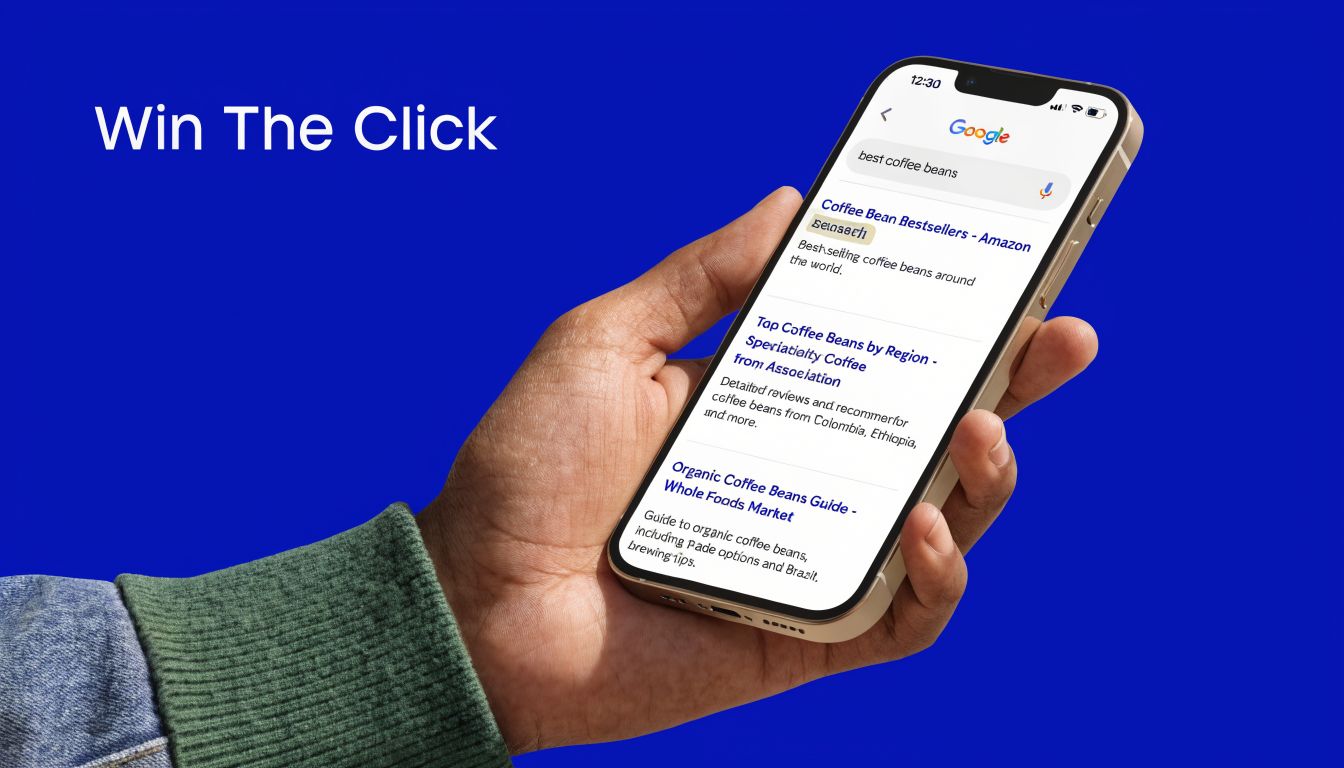
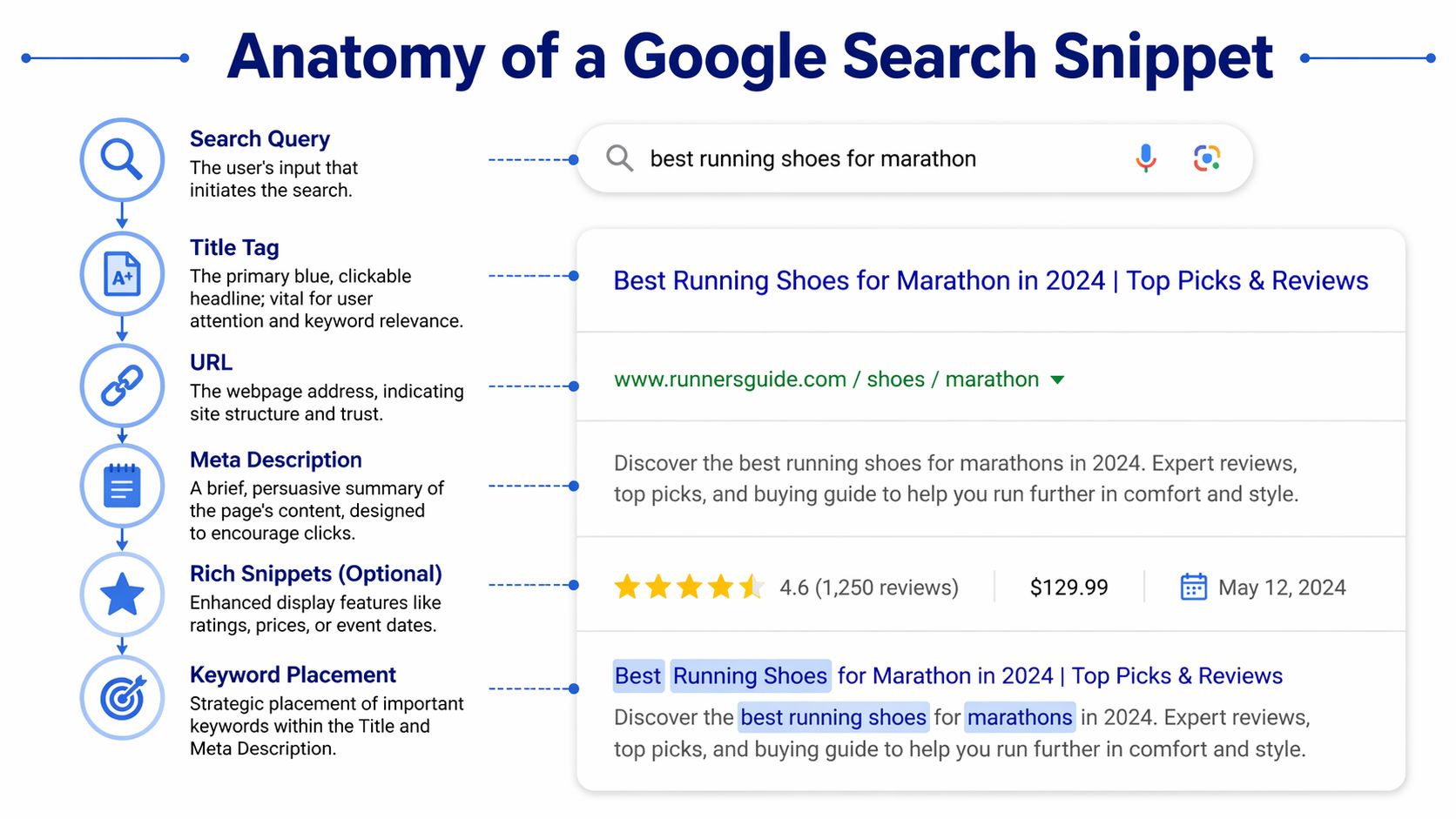
A search result snippet usually gives you four main visual signals: the title tag, the URL, the meta description, and sometimes a rich result element like ratings or pricing. Most users scan all of them in seconds, not in sequence.
That means your meta description can’t work in isolation. It has to support the promise in the title, reinforce relevance from the query, and add one more reason to click.
Understand the space you actually have
Many teams still write descriptions as if they have endless room. They don’t.
Google expanded snippet length in December 2017 from about 155 characters to 320 characters, then reduced it again in May 2018 to roughly 155 characters on desktop and 130 characters on mobile. That shift is one reason concise writing still wins (EZMarketing’s review of meta description length changes).
Here’s the practical takeaway:
- Write for tight display limits: Keep the most important message early.
- Assume mobile gets less room: Front-load the value, not the filler.
- Treat every extra word as expensive: If it doesn’t increase relevance or persuasion, cut it.
Think of a meta description like a carry-on bag. You can’t bring everything. If you overpack, the useful parts get left behind.
Where keywords belong
Keywords in meta descriptions don’t directly improve rankings the way many people assume. Their value is visual and psychological. When the description includes terms related to the query, Google often bolds them in the snippet. That helps users notice your result faster.
The placement matters more than sheer repetition.
Put the primary keyword near the front
If the page targets “emergency plumber in Phoenix,” don’t bury that phrase at the end behind brand filler. Use it naturally near the beginning so relevance is obvious on first scan.
Bad:
“Need fast help for urgent plumbing issues at your home or office? Our experienced team is available for many common repairs in the area.”
Better:
“Emergency plumber in Phoenix for leaks, clogs, and burst pipes. Fast service, clear communication, and easy scheduling.”
The second version signals relevance immediately.
Use secondary terms only if they clarify value
A secondary keyword should help the user understand what’s on the page. It should not read like a list of search terms jammed into a sentence.
Use supporting phrases when they add context, such as:
- Service modifiers: same-day, local, licensed
- Commercial details: pricing, availability, custom orders
- Intent clues: guide, compare, buy, schedule, request quote
Match the snippet to the page role
A homepage description should sound different from a product page. A city service page should sound different from a blog article.
The easiest way to tighten this up is to ask what role the page plays in the funnel:
| Page type | What the snippet should emphasize |
|---|---|
| Homepage | Brand promise and main offer |
| Service page | Problem solved, location, CTA |
| Product page | Product specifics, availability, buying intent |
| Blog post | Clear topic, benefit, reason to read now |
If you need ideas for improving visual differentiation in the results page beyond the description itself, this guide on how to stand out in search results is a useful next read.
The best keyword placement feels invisible. Users notice relevance, not optimization.
Crafting Descriptions That Earn the Click
A searcher compares your result with nine others in a few seconds. The meta description has to answer one practical question fast. Why should they click this page instead of the one above or below it?
That is why strong meta descriptions work like conversion copy, not page summaries. On a local service page, the right line can filter for nearby prospects who need help now. On an ecommerce category page, it can surface product appeal and buying details before the click. On a lead-gen page, it can pre-qualify the visitor by showing exactly what problem you solve.

I treat this field as click acquisition copy. If the snippet earns the wrong click, bounce risk goes up. If it earns the right click, the page has a better shot at turning search traffic into calls, quote requests, or sales.
Start with the decision the searcher is trying to make
Good writing gets easier once you identify the decision behind the query.
A person searching “best hiking boots for winter” is deciding what to choose. A person searching “buy silver hoop earrings” is deciding whether your products feel worth viewing. A person searching “HVAC repair near me” is deciding whether you look local, available, and credible enough to contact.
That decision should shape the description more than the page itself. A business owner may want to describe every service on the page. A searcher usually needs one clear reason to click.
A practical sequence works well:
- Lead with the page topic
- Add the value that makes the click worth it
- End with a next step that fits the query
That structure keeps the copy focused. It also forces you to make a choice about what matters most, which is usually where stronger snippets come from.
Write with specifics that reduce hesitation
Generic copy rarely wins a crowded results page. Specific copy does.
Compare these two versions for a tax service page:
- “Professional tax services are offered for individuals and small businesses.”
- “Get tax help for your business or personal return from a team that keeps filing simple and deadlines clear.”
The second version gives the visitor something concrete to react to. It sounds like a page built for a real problem, not a placeholder written to fill the field.
What tends to improve click quality:
- Clear outcomes: compare options, solve the issue, find the right fit, get a quote
- Concrete relevance: city names, product categories, use cases, turnaround details
- Useful buying cues: pricing, scheduling, availability, gift-ready, custom, same-day
What weakens the snippet:
- Broad claims: quality service, trusted team, complete solutions
- Keyword repetition: phrases stacked together without a natural sentence
- Empty brand language: family-owned, customer-focused, advanced, with no customer benefit attached
Write for the person making a choice under time pressure.
Build the sentence around hook, value, and action
The strongest descriptions usually do three jobs inside one short block of copy.
| Part | What it does | Example approach |
|---|---|---|
| Hook | Gives the searcher a reason to notice the result | Need a plumber in Mesa? Compare top options. Shop handmade silver jewelry. |
| Value | Proves the page is worth the click | Fast scheduling, clear pricing, everyday styles, expert guidance |
| Action | Moves the user toward the visit | Book online, see styles, request a quote, read the guide |
These parts do not need labels. They just need to be present.
The same discipline applies to title tags and on-page messaging. This guide on how to write headlines that drive leads is useful if you want to sharpen the same skills in a longer format.
Weak versus strong examples
Small changes in wording can shift the whole feel of a search result.
Local service
Weak:
“ABC Plumbing offers plumbing services for residential and commercial customers.”
Strong:
“Need a plumber in Mesa? Get help with leaks, clogs, and water heater issues with fast scheduling and clear service options.”
Why it works: it sounds local, names real problems, and gives a time-sensitive prospect a reason to click.
Ecommerce
Weak:
“Shop our jewelry collection online. We have many products and styles available.”
Strong:
“Shop handmade silver jewelry with modern, everyday designs. Find earrings, rings, and gift-ready pieces online.”
Why it works: it sells the product experience, not just the existence of a catalog.
B2B software
Weak:
“Our software platform helps businesses improve operations and increase efficiency.”
Strong:
“See how workflow software helps teams reduce manual work, organize approvals, and keep projects moving.”
Why it works: it replaces abstract value with operational outcomes a buyer can picture.
A useful breakdown of persuasive copy structure is below.
Use CTAs with restraint
Calls to action help when they match the page and the query. They hurt when they feel pasted on.
Short, low-friction CTAs usually fit best:
- Service pages: Book today, request a quote, call now
- Product pages: Shop now, see details, browse styles
- Content pages: Learn more, compare options, read the guide
The CTA should finish the pitch, not try to rescue weak copy. If the description has not established relevance and value, “learn more” does nothing. If it has, a simple CTA can tip the click in your favor.
Meta Description Examples for Your Business Type
Different businesses lose clicks for different reasons. A local service company often hides location cues. An ecommerce store buries buying details. A B2B company writes like a brochure.
The fastest way to improve your own copy is to look at examples that match the type of page you sell through.
Moz recommends reverse-engineering searcher intent before writing. For local service providers, including location details or hours can improve qualified traffic, while product pages benefit from surfacing pricing, availability, or key specs directly in the description (Moz on search intent and meta descriptions).
Meta Description Templates by Business Type
| Business Type | Weak Example | Strong Example | Why It Works |
|---|---|---|---|
| Local service business | “We provide professional plumbing services for residential and commercial properties.” | “Need a plumber in Tampa? Get help with leaks, drains, and water heaters from a local team. Book service today.” | It leads with the service and location, names common problems, and gives a direct next step. |
| Ecommerce brand | “Browse our collection of handmade jewelry and accessories online.” | “Shop handmade gold jewelry with minimalist designs, gift-ready styles, and everyday wear options. See new arrivals.” | It sounds like a real shopping result, adds product appeal, and supports transactional intent. |
| B2B service provider | “Our software helps businesses streamline operations and improve productivity.” | “Manage approvals, tasks, and team workflows in one place. See how project management software simplifies daily operations.” | It translates a broad promise into practical use cases and gives searchers a clearer reason to click. |
Local services need qualification cues
If you run HVAC, legal, dental, roofing, pest control, or plumbing campaigns, broad wording usually attracts the wrong click. The searcher wants to know whether you serve their area, solve their problem, and offer a realistic next step.
Good local descriptions often include some mix of:
- Location relevance: city, neighborhood, or service area
- Problem relevance: blocked drain, broken AC, cracked windshield
- Business action: schedule, request estimate, call today
A city page for a locksmith shouldn’t sound like the company homepage. It should sound like an answer to a nearby urgent need.
A local snippet earns more qualified clicks when it sounds close, specific, and ready to help.
Ecommerce descriptions should sell the product, not the category
A lot of product and collection pages waste the description on category labels. “Shop men’s jackets online” says almost nothing. Searchers want clues about style, use, fit, or shopping confidence.
For ecommerce, stronger descriptions often pull from the page’s real merchandising details:
- material
- style
- use case
- availability
- gift angle
- size or feature cues
Even on collection pages, you can write with buying intent. “Shop women’s waterproof hiking boots built for cold-weather trails and everyday comfort” is far more useful than “Browse our selection of boots and outdoor footwear.”
B2B pages need plain English
Many B2B companies write meta descriptions as if procurement teams are grading vocabulary. Searchers don’t click because your description says “end-to-end enterprise-grade innovation.” They click because they understand what the product helps them do.
A stronger B2B meta description usually answers one of these:
- What task does this tool simplify?
- What bottleneck does this service remove?
- Who is it for?
- What outcome does the page help the reader evaluate?
When in doubt, rewrite for the operations manager, not the boardroom deck.
Scaling and Testing for Peak Performance
Writing ten meta descriptions by hand is manageable. Writing hundreds for service locations, blog archives, or product pages is a different job.
At that point, the question isn’t only how to write meta descriptions for SEO. It’s how to build a repeatable system that keeps them unique, useful, and measurable.
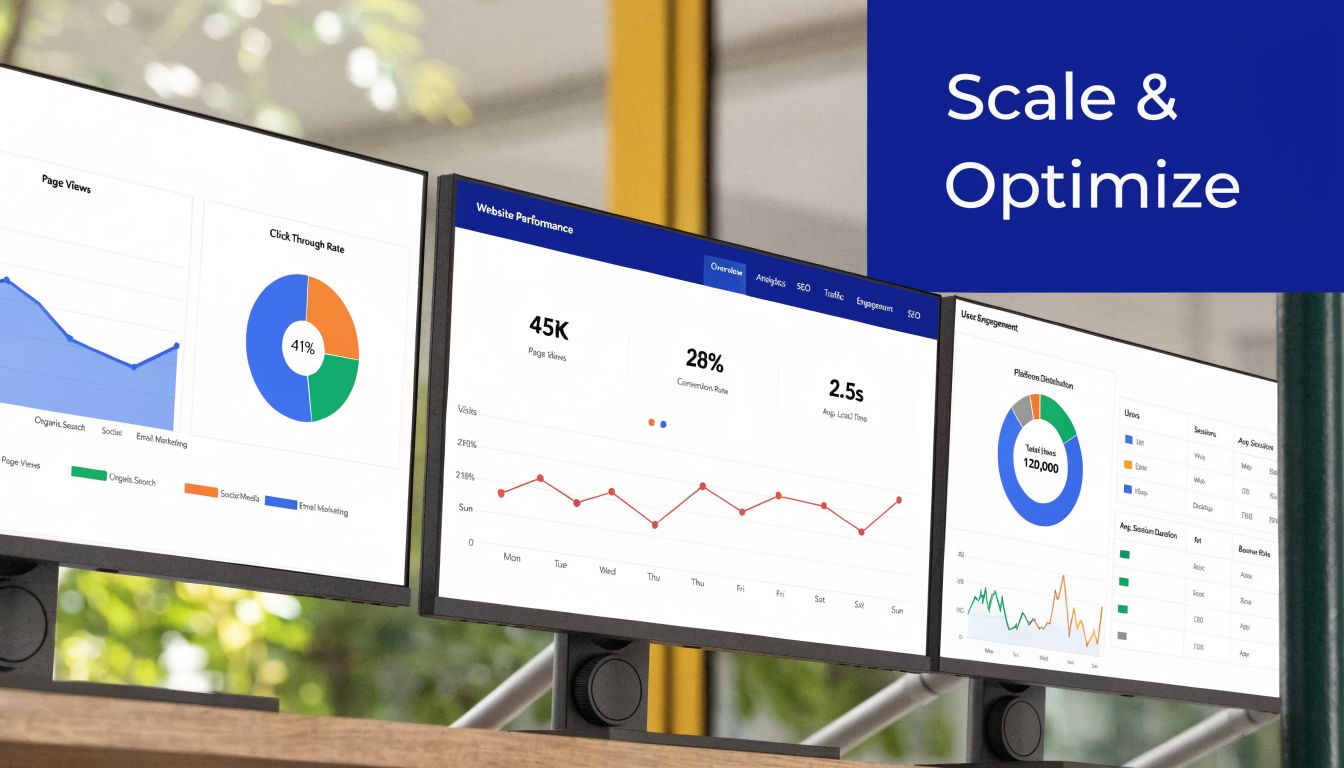
Seobility recommends A/B testing pages with underperforming CTRs and notes that improving meta descriptions can increase qualified clicks by 20-40% without requiring additional traffic investment (Seobility’s meta description framework).
Use templates without creating duplicates
Templates are useful when they pull from page-specific data. They fail when they produce near-identical copy at scale.
A healthy template for ecommerce might combine fields like product type, material, style, and use case. A local service template might combine service, city, and key problem solved. The goal is not perfect literary flair on every URL. The goal is avoiding generic repetition while preserving relevance.
Here’s a simple way to view it:
| Scalable approach | Risk |
|---|---|
| Dynamic templates with page-specific attributes | Can read robotic if no human review happens |
| Full manual writing | Hard to maintain on large sites |
| AI-assisted drafts with editing | Fast, but needs fact-checking and quality control |
If you manage descriptions inside Shopify, WordPress, Webflow, or a custom CMS, build fields that support distinct outputs instead of one boilerplate sentence pasted everywhere.
Find the pages worth testing first
Not every page deserves the same attention. Start where a better snippet can produce the fastest business impact.
In Google Search Console, look for pages with:
- High impressions and weak CTR: The page is visible but not winning enough clicks.
- Strong average position but flat traffic: The ranking gives you an opportunity the snippet isn’t converting.
- Important commercial value: Service pages, top product categories, and high-intent landing pages.
Then rewrite one variable at a time. Change the hook. Shift the CTA. Lead with a stronger benefit. Add location or product detail. Don’t revise everything at once if you want to learn what moved performance.
If you want a broader primer on testing methodology before applying it to snippets, this article on A/B testing in marketing gives a practical foundation.
Build a review rhythm
Most companies write meta descriptions once and never return. That’s a mistake.
Search behavior changes. Competitors change messaging. Your own offers change. Good snippet management needs a recurring review cycle tied to actual performance.
A practical review process looks like this:
- Export page performance from Search Console
- Prioritize URLs with commercial intent
- Rewrite the weakest descriptions
- Monitor click behavior after indexing
- Keep what improves qualified traffic
For teams that want outside support, options include in-house SEO workflows, CMS plugins, and agency help. Upward Engine’s A/B testing guidance for ecommerce is useful if your snippet work is part of a wider conversion testing program.
Don’t scale bad copy faster. Scale a clear system, then refine the pages that affect revenue most.
Common Meta Description Mistakes to Avoid
Most meta description problems aren’t caused by a lack of effort. They come from using the wrong standard. Teams write for completeness, for brand language, or for internal approval. Searchers need relevance and clarity.
The result is a lot of snippets that are technically present but commercially weak.
Writing one description for many pages
Duplicate meta descriptions are one of the fastest ways to blur page relevance. If ten pages say nearly the same thing, users get no clue which one fits their need best.
This shows up constantly on service area pages, product categories, and blog archives. The fix is simple. Write to the page’s actual purpose. Change the promise, not just the city name or one keyword.
Stuffing keywords instead of writing a sentence
Keyword stuffing still happens because people want bolded terms in the SERP. The instinct makes sense. The execution usually hurts.
A description that reads like “Dallas plumber, emergency plumber Dallas, plumbing repair Dallas TX” may look optimized in a checklist. It looks low-trust in search results.
Use the term naturally once, maybe twice if the wording supports it. Then use the rest of the space to say something persuasive.
Sounding impressive instead of useful
This is a major problem in B2B and professional services. Teams reach for phrases like:
- industry-leading solutions
- forward-thinking approach
- extensive services
- customer-centric support
None of those phrases tell the searcher what they’ll get from the page.
Replace vague positioning with page-specific meaning. Name the service. Name the product type. Name the problem solved. Name the next step.
If a competitor could copy your meta description word for word and it would still fit their page, the copy isn’t specific enough.
Creating a bait-and-switch snippet
A meta description should persuade, but it also has to be true.
If the snippet promises pricing, same-day service, or detailed comparisons and the page doesn’t deliver that information, users feel misled. Even when the click happens, the visit often doesn’t turn into anything useful.
This is especially costly on lead generation pages. Overpromising might improve CTR briefly, but it often lowers lead quality and trust.
Letting Google do all the writing
Sometimes Google rewrites the snippet anyway. That doesn’t mean you should skip the field.
When you don’t provide a strong description, you’re giving up message control. Google may pull text from navigation labels, introductory copy, or sections that aren’t built to persuade. That often creates snippets that are relevant in a narrow sense but weak in a commercial sense.
A custom description gives you a chance to shape the click. That’s worth doing, even when the search engine sometimes chooses a different version.
Frequently Asked Questions About Meta Descriptions
Should you use AI to write meta descriptions
Yes, with supervision.
AI can help generate first drafts, especially for large sites with many product, service, or location pages. It’s useful for ideation, pattern building, and turning structured page data into a working sentence. It’s less reliable at nuance, factual accuracy, and length discipline.
Use AI when you need speed. Use human review when you need judgment. The final version should still reflect search intent, page reality, and business priorities.
Why does Google ignore the meta description I wrote
Google may choose a snippet from the page content when it thinks that text better matches the user’s query.
That often happens when the written meta description is too generic, too broad, or not closely aligned with the search term that triggered the result. It can also happen when the page contains stronger, more query-specific language elsewhere in the copy.
The best response isn’t frustration. It’s revision. Tighten the description so it mirrors the page’s real topic and likely search intent more closely.
What’s the difference between a meta description and an Open Graph description
A meta description is meant for search engines and may appear in search results. An Open Graph description supports how a page appears when shared on social platforms and messaging apps.
They can be similar, but they don’t have to be identical. Search users often need relevance and intent match. Social users may respond better to curiosity, emotion, or shareability. Write each for the channel where it appears.
Should every page have a unique meta description
Every important indexable page should.
If a page matters for search visibility, it deserves page-specific messaging. That’s especially true for homepages, main service pages, product categories, products, and high-value blog content. Utility pages, filtered URLs, or pages you don’t want indexed don’t need the same level of effort.
What should you do if your description keeps getting truncated
Move the most important information earlier in the sentence.
Don’t save the core benefit or CTA for the end. Front-load the value, remove filler, and tighten wording. In practice, shorter descriptions often perform better because they communicate the key idea before the snippet cuts off.
Can special characters help
Sometimes, but restraint matters.
A clean separator or symbol can draw the eye if it fits the brand and still reads naturally. Overuse makes the snippet look gimmicky, and search engines may ignore formatting choices that feel manipulative.
The safer route is stronger copy, not visual tricks.
If your site is earning impressions but not enough qualified clicks, your snippets may be part of the bottleneck. Upward Engine helps businesses improve on-page SEO, strengthen search messaging, and turn visibility into more leads and sales.